Why React Native Is a Smart Choice for Mobile App Development in 2026
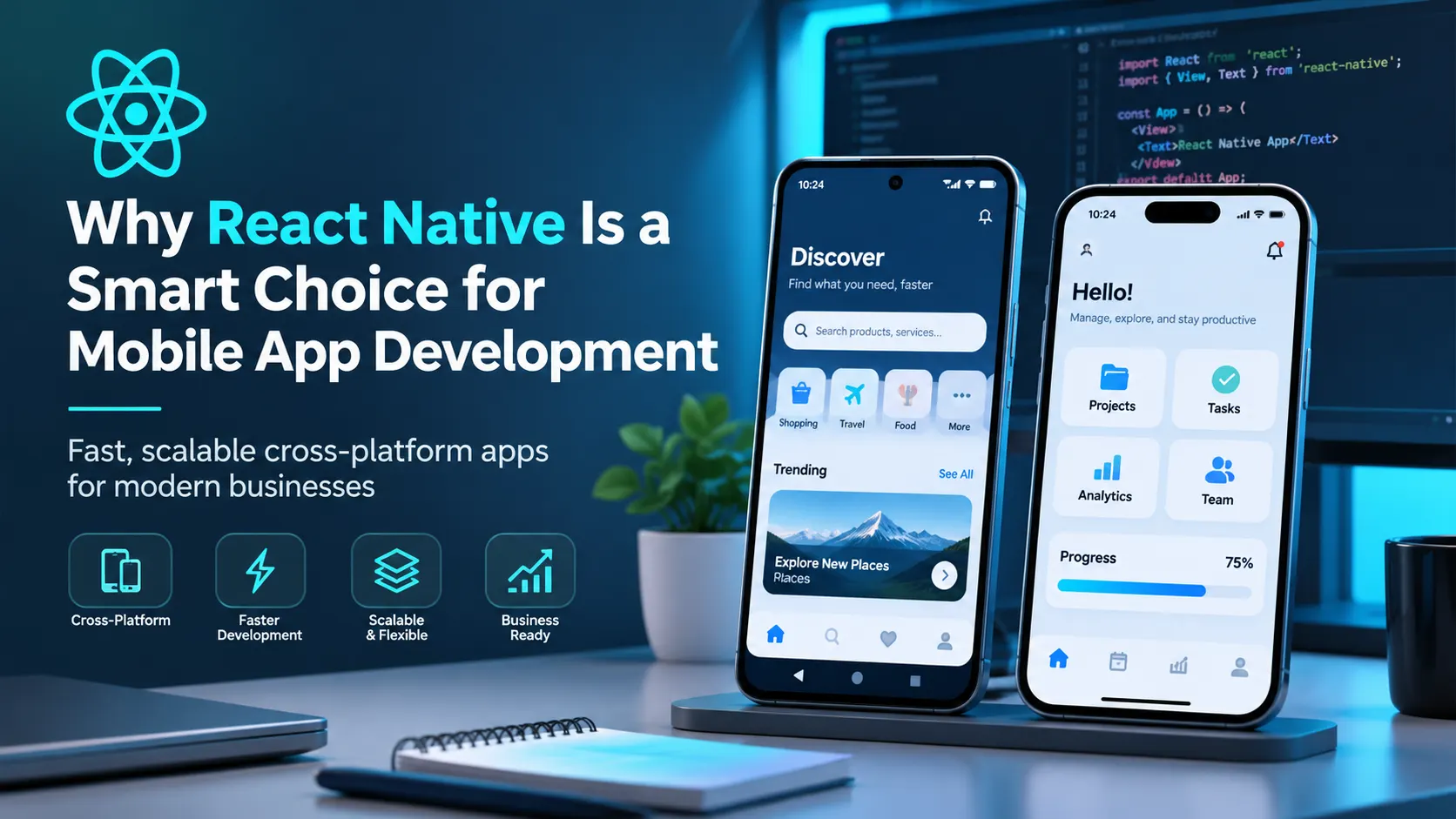
Mobile applications have become essential for businesses looking to improve customer engagement, streamline operations, and expand their digital presence. From ecommerce platforms and healthcare solutions to ride-hailing services and enterprise applications, businesses increasingly rely on mobile technology to deliver better user experiences.
However, building a successful application involves more than creating an attractive interface. Businesses must consider development costs, performance, scalability, security, and compatibility across different devices.
This is where React Native stands out as a powerful framework for mobile app development.
Developed by Meta, React Native enables developers to create applications for Android and iOS using a shared codebase. Its flexibility, reusable components, and native platform capabilities make it an attractive option for startups, growing businesses, and established enterprises.
At Metatech Official, we help businesses transform innovative ideas into functional digital products through professional mobile app development services.
In this guide, we'll explore why React Native remains a strong choice for modern application development, its major business advantages, and how to determine whether it's the right technology for your next project.
What Makes React Native Different From Traditional App Development?
React Native is an open-source framework that uses JavaScript or TypeScript with React to develop mobile applications.
Traditionally, businesses often created separate applications for Android and iOS. Android applications commonly use Kotlin or Java, while native iOS applications typically use Swift or Objective-C.
Developing and maintaining two separate codebases can increase development effort, testing requirements, and ongoing maintenance costs.
React Native provides an alternative.
With a shared development architecture, developers can reuse substantial portions of their application logic and interface components across both operating systems.
Unlike applications that simply display a website inside a mobile container, React Native uses native platform components to deliver mobile interfaces.
This allows businesses to combine cross-platform efficiency with native device functionality.
For companies investing in custom mobile app development, this flexibility can offer meaningful operational advantages.
1. Reach Android and iOS Users With a Shared Codebase
One of React Native's most significant advantages is cross-platform development.
Instead of building two completely independent applications, developers can share much of the code between Android and iOS.
This does not mean every line of code will work identically across both platforms. Certain features, permissions, and interface elements may still require platform-specific implementation.
However, sharing business logic and reusable components can substantially reduce duplicated development work.
Why Cross-Platform Development Benefits Businesses
A shared codebase offers several practical advantages:
More consistent functionality across Android and iOS.
Reduced duplication during development.
Easier coordination of new features.
Simplified maintenance of shared application logic.
Faster development when requirements are suitable for cross-platform implementation.
For startups operating with limited resources, these benefits can be particularly valuable.
A professional mobile app development company can assess which components should be shared and which require native development.
2. Reduce Development Costs Without Sacrificing Essential Features
Budget is often one of the biggest considerations when developing a mobile application.
Businesses must account for interface design, frontend development, backend infrastructure, testing, deployment, and future maintenance.
Building separate native applications can increase costs because substantial portions of the work must be completed independently.
React Native can help reduce this duplication.
For example, a business developing an appointment-booking application may need registration, scheduling, notifications, payments, and customer profiles.
Many of these features can share application logic across platforms.
This enables developers to focus more resources on usability, integrations, and business-specific requirements.
However, React Native does not automatically make every project cheaper. Complex native integrations and platform-specific functionality may increase development costs.
The most effective approach is to evaluate technical requirements before selecting the framework.
3. Accelerate Application Development and Product Launches
In competitive markets, reaching customers early can create a significant advantage.
React Native supports efficient development through reusable components, shared logic, and tools that improve developer productivity.
One particularly useful feature is Fast Refresh, which allows developers to see many code changes quickly during development.
This reduces unnecessary interruptions when adjusting interfaces or testing functionality.
Faster Development for Startups
Imagine launching a food delivery application.
The platform may require customer registration, restaurant listings, order tracking, payment integration, and notifications.
Using React Native, developers can implement many features through a shared architecture instead of independently rebuilding them for each operating system.
This can help teams create a minimum viable product, gather feedback, and refine the application.
Businesses seeking custom app development can benefit from this iterative process because features can evolve according to actual user requirements.
4. Deliver Responsive and Native-Like User Experiences
Application performance directly affects customer satisfaction.
Users expect smooth navigation, responsive interfaces, reliable loading, and consistent functionality.
React Native uses native user interface building blocks rather than relying exclusively on web-based rendering.
This helps developers create applications that feel familiar on Android and iOS devices.
React Native's modern architecture also improves how JavaScript interacts with native functionality.
Its JavaScript Interface (JSI) and updated rendering system support more efficient communication between application logic and native components.
Nevertheless, performance depends on implementation quality.
Poorly optimized components, unnecessary rendering, excessive network requests, and inefficient state management can still produce slow applications.
Experienced developers must optimize navigation, data handling, rendering, and device-specific operations to achieve reliable results.
5. Access Essential Smartphone Features
Modern applications often require more than basic screens and buttons.
Businesses may need GPS tracking, camera access, biometric authentication, push notifications, file uploads, or location-based services.
React Native supports integration with many native device capabilities through its APIs and compatible libraries.
For example:
Ride-hailing applications may require live location tracking, maps, driver information, and trip notifications.
Ecommerce applications may use product images, secure payment integrations, order tracking, and promotional notifications.
Healthcare applications may provide appointment reminders, document uploads, and video consultations.
These capabilities make React Native suitable for many types of business applications.
When advanced functionality is required, developers may need to create or integrate custom native modules.
A reliable mobile app development agency should evaluate these requirements during technical planning rather than assuming every integration is immediately available.
6. Simplify Maintenance and Future Application Updates
Launching an application is only the beginning.
Businesses must continue improving their software to address customer feedback, security issues, operating system changes, and emerging requirements.
React Native's shared codebase can simplify ongoing development.
For example, improvements to common application logic may be implemented once and used across both platforms.
This reduces the need to maintain duplicate functionality.
Managing Application Updates
React Native applications can also support over-the-air updates for eligible JavaScript and asset changes when an appropriate update system is configured.
However, updates involving native code changes generally require new application builds and distribution through the relevant app stores.
Developers must also comply with Apple and Google policies when delivering updates.
A structured maintenance strategy should include dependency updates, security reviews, compatibility testing, and performance monitoring.
These practices help businesses maintain reliable applications as their user base grows.
7. Build Applications That Can Grow With Your Business
Scalability is essential for businesses planning long-term expansion.
An application serving a few hundred customers may eventually need to support thousands of active users.
React Native can provide a flexible frontend foundation, but overall scalability depends on the complete system architecture.
Backend services, databases, cloud infrastructure, caching, and API design are equally important.
For example, a delivery application with thousands of registered drivers needs efficient location processing, secure authentication, and dependable server infrastructure.
React Native handles the mobile application experience, while backend systems manage data processing and operational workloads.
At Metatech Official, we approach mobile app development by considering both frontend functionality and the infrastructure supporting the application.
Planning for growth early can help businesses avoid unnecessary restructuring later.
8. Take Advantage of a Mature Development Ecosystem
React Native benefits from an established ecosystem of developers, libraries, development tools, and technical resources.
This ecosystem can help teams implement common functionality without developing every component from scratch.
Popular areas supported by community and commercial tools include navigation, application state management, testing, analytics, and device integrations.
React Native also benefits from the broader React ecosystem.
Developers familiar with React concepts may find it easier to transition into React Native development, although mobile-specific expertise is still necessary.
When businesses hire app developer professionals, they should evaluate practical experience with React Native, native integrations, backend APIs, and app store deployment.
Knowledge of JavaScript alone is not sufficient for complex production applications.
9. React Native vs Native Development: Which Should You Choose?
React Native is a strong option for many projects, but it is not automatically the best framework for every application.
The decision should depend on product requirements, performance expectations, available resources, and long-term maintenance needs.
| Development factor | React Native | Native development |
|---|---|---|
| Android and iOS code | Substantial code sharing | Primarily separate codebases |
| Development efficiency | Often faster for cross-platform products | Depends on platform scope |
| Native device features | Accessible through libraries and native modules | Direct platform API access |
| Performance | Strong for many business applications | Maximum platform-specific control |
| Maintenance | Shared features can be maintained together | Platform changes handled separately |
| Best suited for | Many business, ecommerce, and service applications | Highly specialized platform-specific applications |
When React Native Makes Sense
React Native is worth considering when businesses need applications on both operating systems, want efficient development, and expect substantial shared functionality.
When Native Development May Be Better
Native development may be preferable for applications requiring highly specialized hardware access, platform-specific capabilities, or particularly demanding graphics and real-time processing.
For businesses focused exclusively on Apple's ecosystem, dedicated ios app development may also be a practical choice.
A technology decision should follow a requirements assessment rather than relying on marketing claims.
10. Why Choose Metatech Official for React Native App Development?
Choosing the right framework matters, but choosing the right development partner is equally important.
A successful mobile application requires technical planning, user-focused design, reliable integrations, testing, and long-term maintainability.
At Metatech Official, we provide mobile app development services designed around specific business needs.
Our development approach emphasizes understanding the client's objectives before selecting technologies or creating features.
Business-Focused Application Planning
We begin by identifying the application's intended audience, core features, operational requirements, and growth objectives.
This helps establish a practical development roadmap.
Custom Application Design and Development
Our custom mobile app development approach focuses on building solutions aligned with business workflows rather than forcing every project into a generic template.
Depending on project requirements, this may include customer-facing applications, operational dashboards, API integrations, and backend systems.
Cross-Platform Development Expertise
Our team works with React Native and related technologies to develop applications for Android and iOS.
We also consider the backend infrastructure and integrations needed to support dependable application functionality.
Testing and Deployment Preparation
Before launch, mobile applications require functional testing, usability checks, performance evaluation, and device compatibility reviews.
Deployment planning should also account for app store requirements and ongoing maintenance.
As a mobile app development company, Metatech Official aims to help businesses create digital solutions that remain practical, maintainable, and aligned with their long-term goals.
11. How to Prepare Before Hiring a Mobile App Developer
Before approaching a development partner, businesses should define what they want their application to accomplish.
A clear project brief helps reduce misunderstandings and makes quotations more meaningful.
Consider the following questions:
Who will use the application?
What problem does it solve?
Which features are essential for launch?
Will it require Android, iOS, or both?
Does it need payments, GPS, notifications, or third-party integrations?
Will administrators require a web dashboard?
What are the expected launch requirements and budget?
Businesses should also discuss source code ownership, maintenance arrangements, infrastructure expenses, and post-launch responsibilities.
When evaluating whether to hire app developer specialists or work with an established agency, examine technical capability, communication practices, project documentation, and the proposed delivery process.
The right partner should be able to explain not only how an application will be built, but why the proposed architecture suits the business.
Final Thoughts: Is React Native the Right Framework for Your Business?
React Native remains a compelling choice for businesses seeking efficient, flexible, and scalable cross-platform application development.
Its shared codebase, native interface capabilities, development ecosystem, and integration options make it suitable for a wide range of mobile products.
For startups, React Native can support efficient product development and early market testing. For established businesses, it can provide a practical foundation for customer-facing applications and internal operational tools.
However, the best technology always depends on the application's specific requirements.
At Metatech Official, our goal is to combine technical expertise with business-focused planning to deliver effective custom app development solutions.
Whether you're launching a startup, modernizing existing software, or expanding your business through mobile technology, working with a professional mobile app development agency can help turn your requirements into a structured development strategy.
Frequently Asked Questions (FAQs)
1. Why is React Native popular for mobile app development?
React Native is popular because it allows developers to share substantial portions of application code between Android and iOS. This can reduce duplicated development effort, simplify maintenance, and accelerate delivery. It also supports native interface components and access to many smartphone features.
2. Is React Native suitable for custom mobile app development?
Yes. React Native is suitable for many custom mobile app development projects, including ecommerce, booking, delivery, healthcare, and business management applications. Developers can create customised interfaces, integrate backend systems, and implement native functionality based on project requirements.
3. How much does it cost to hire a mobile app development company?
The cost of hiring a mobile app development company depends on application complexity, design requirements, supported platforms, third-party integrations, backend infrastructure, and testing needs. A basic application generally requires fewer resources than a complex platform with real-time tracking, payments, and multiple user roles.
4. Can React Native be used for both Android and iOS app development?
Yes. React Native supports Android and ios app development through a shared codebase. Developers can reuse application logic and interface components while implementing platform-specific functionality when necessary. Both operating systems still require appropriate testing and deployment processes.
5. Why should businesses choose Metatech Official for mobile app development services?
Metatech Official provides mobile app development services focused on business requirements, customized functionality, and maintainable software architecture. Businesses can work with the team to plan React Native applications, develop frontend and backend functionality, integrate essential services, and prepare applications for deployment.