Fitness App Development in 2026: Cost, Features, Process, and Key Considerations
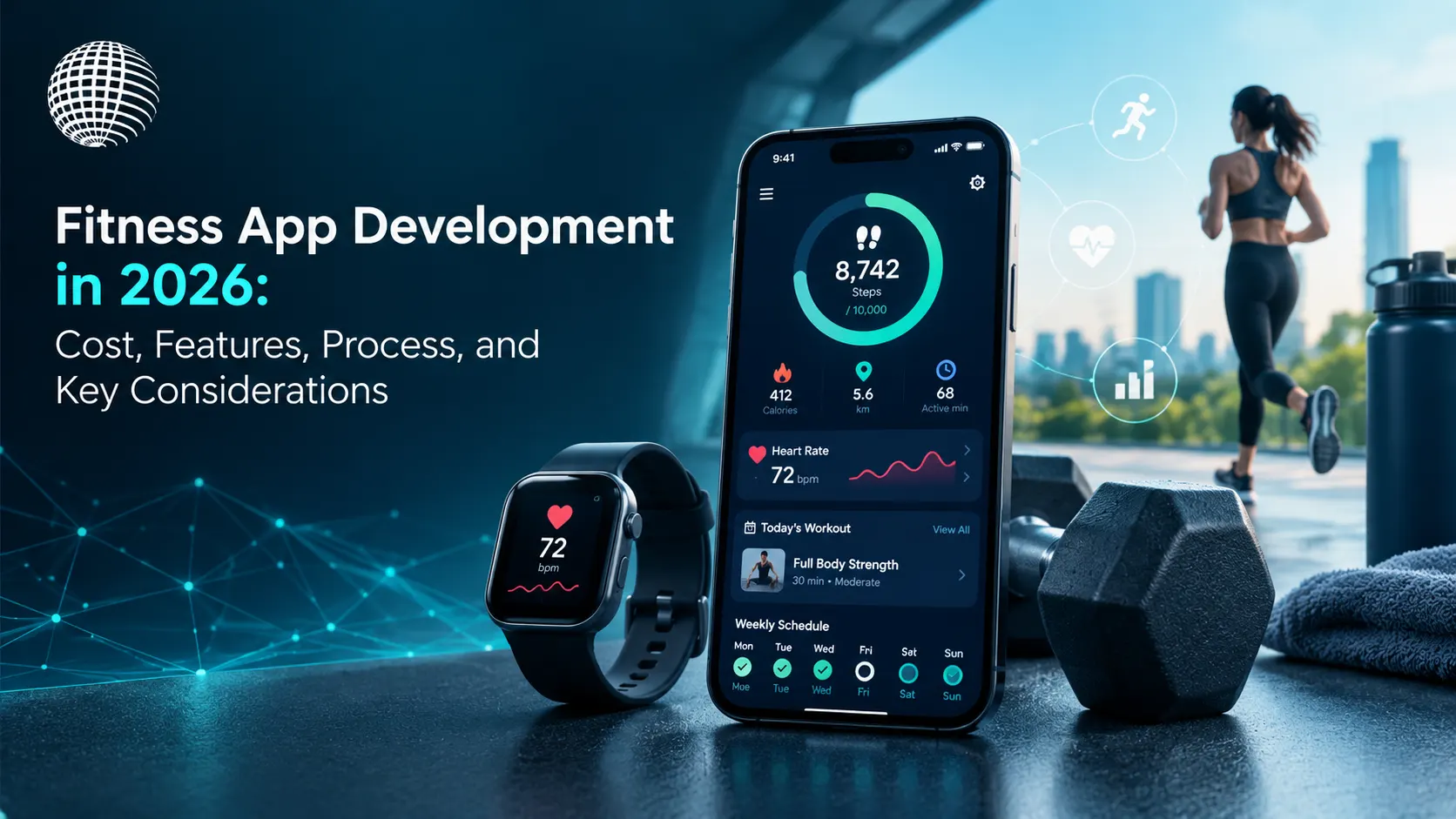
Fitness has become an important part of people's daily routines, and mobile technology is making it easier to maintain healthier lifestyles. From tracking daily steps and monitoring calories to following personalised workout programs, fitness applications give users convenient ways to manage their physical activities and wellness goals.
For businesses, this growing demand presents an opportunity to introduce digital fitness solutions that connect users with trainers, nutritionists, workout programs, and health-tracking tools. However, building a successful fitness application requires careful planning, the right technology, and an understanding of what users actually need.
Professional mobile app development makes it possible to transform fitness-related ideas into functional digital products. Whether you are planning a workout tracker, nutrition application, or comprehensive fitness platform, understanding the development process, essential features, and estimated costs can help you make informed decisions.
In this guide, Metatech Official explores the different types of fitness applications, features worth considering, development stages, cost factors, monetisation opportunities, and security requirements.
Fitness App Development Market Overview
The growing interest in personal wellness, wearable technology, and digital healthcare has increased demand for fitness applications. Smartphones and connected devices allow users to monitor their physical activities, maintain workout schedules, and access personalised fitness guidance without visiting a gym or hiring an in-person trainer.
Applications such as MyFitnessPal, Strava, Fitbit, and Peloton demonstrate how technology can support different fitness requirements. Some focus on activity tracking, while others provide workout programs, nutrition guidance, or interactive training experiences.
For businesses entering this market, competition makes product differentiation particularly important. An application needs to offer useful functionality, reliable performance, and an engaging user experience to attract and retain its audience.
Partnering with an experienced mobile app development company can help businesses identify suitable technologies, define application requirements, and develop solutions that meet their intended objectives.
How Has Digital Fitness Changed User Expectations?
The pandemic accelerated the adoption of online fitness services and virtual workout programs. Many users became comfortable exercising at home, attending online classes, and monitoring their physical activities through mobile applications.
Although fitness routines have evolved, convenience and personalisation remain important expectations. Users increasingly look for applications that combine digital and traditional fitness experiences.
Some developments influencing fitness applications include:
Wearable technology: Smartwatches and fitness trackers provide information about steps, heart rate, sleep, and physical activity.
Personalized workout programs: Applications can recommend exercises according to user preferences and fitness objectives.
Virtual training: Live classes and recorded workout sessions allow users to exercise from different locations.
AI-powered recommendations: Intelligent systems can analyze available activity information to suggest relevant content and experiences.
Community engagement: Social challenges, progress sharing, and leaderboards encourage users to remain active.
These developments create opportunities for businesses to build more interactive and personalised fitness platforms.
6 Types of Fitness Applications
Understanding the different categories of fitness applications is an important first step in defining your project.
1. Activity Tracking Applications
Activity tracking apps help users monitor their daily movements and understand their activity levels. Applications such as Fitbit and Apple Health provide access to different health and fitness measurements.
Common functionalities include:
Step counting and daily activity monitoring.
Distance tracking for walking, running, and cycling.
Estimated calorie expenditure.
Sleep duration and activity records.
Heart rate monitoring through supported devices.
These applications are suitable for users who want to maintain consistent physical activity and monitor their progress.
2. Workout and Training Applications
Workout applications provide structured exercise programs for people with different fitness levels. They may include strength training, cardio, yoga, stretching, and high-intensity interval training.
Popular examples include Nike Training Club and Peloton.
Important features include exercise libraries, instructional videos, personalised workout schedules, and progress reports. These tools help users follow structured routines without depending entirely on in-person training.
3. Nutrition and Diet Applications
Nutrition applications help users monitor their eating habits and make informed dietary choices. They commonly include calorie tracking, nutritional information, meal planning, and food databases.
Examples include MyFitnessPal and Cronometer.
Users can record their daily food intake, monitor macronutrients, save favourite meals, and explore recipes according to their preferences.
4. Yoga and Meditation Applications
Fitness also involves mental wellness, relaxation, and stress management. Yoga and meditation applications provide guided sessions, breathing exercises, mindfulness activities, and sleep programs.
Applications such as Calm and Headspace demonstrate how digital platforms can make wellness resources more accessible.
These applications can include video classes, audio sessions, meditation schedules, and personalised recommendations.
5. Personal Trainer Applications
Personal trainer apps connect users with fitness professionals who provide customised exercise programs and coaching.
Their functionality may include:
Individual workout plans.
Trainer profiles and booking options.
Live video consultations.
Exercise demonstrations.
Progress monitoring and feedback.
Businesses can use these applications to connect trainers with customers and offer digital coaching services.
6. Mood and Wellness Tracking Applications
Mood tracking applications help users record emotional patterns and understand their relationship with daily habits, sleep, and physical activity.
Common features include mood journals, daily check-ins, stress management exercises, sleep records, and wellness recommendations.
These applications can complement broader fitness platforms by addressing mental wellness alongside physical activity.
Essential Features Every Fitness App Should Include
Choosing the right features is essential for creating an application that users find useful and easy to navigate. The functionality should reflect the application's purpose and the expectations of its intended audience.
1. User Registration and Authentication
Allow users to create accounts through email addresses, phone numbers, or supported social login options. Secure authentication helps protect personal information and provides a convenient way to access individual accounts.
2. Personalised User Profiles
User profiles can include information such as age, height, weight, fitness level, preferences, and personal goals. These details can help applications provide relevant workout suggestions and display individual progress.
3. Workout Library
A comprehensive workout library should include exercise descriptions, instructional videos, images, and difficulty levels. Users should be able to select activities according to their interests and fitness experience.
4. Notifications and Reminders
Push notifications can remind users about scheduled workouts, upcoming sessions, and personal goals. Businesses should keep notifications relevant and avoid sending excessive alerts.
5. Progress Statistics
Charts, progress bars, and activity summaries help users understand their performance over time. Visual reports can display completed workouts, activity duration, calories burned, and achieved milestones.
6. Activity Tracking
Integration with smartphone sensors and GPS can help monitor movement, distance, and exercise duration. Supported wearable devices may provide additional information, including heart rate and sleep patterns.
7. Third-Party Device Integration
Fitness applications can connect with smartwatches, fitness bands, and other compatible devices through APIs. This allows information from different sources to be synchronized and displayed within one platform.
8. Fitness and Nutrition Database
A structured database of exercises, meals, nutritional information, and workout programs gives users more options. It also helps applications deliver personalized content according to user preferences.
6 Advanced Features That Can Improve Fitness Applications
Beyond basic functionality, advanced features can make fitness applications more interactive and engaging.
Live Streaming: Live workout sessions allow trainers to interact with users, demonstrate exercises, and provide guidance in real time.
Social Sharing: Users can share workout achievements, completed challenges, and personal milestones with friends or fitness communities.
Community and Leaderboards: Challenges, achievement badges, points, and rankings can encourage participation and create a sense of friendly competition.
Barcode Scanning: Food barcode scanning can simplify nutritional tracking by helping users retrieve product information and record their meals.
Geolocation: GPS functionality can track outdoor activities, display running routes, and measure distances covered during walks or cycling sessions.
Educational Content: Fitness tips, exercise tutorials, nutrition articles, and wellness videos can provide additional value and encourage users to explore the application regularly.
How to Develop a Fitness App: 8 Important Steps
A structured development process helps businesses manage project requirements, reduce technical challenges, and build applications that meet user expectations.
1. Define Your Application's Goals
Begin by identifying the purpose of your application and the problem it will address. Determine your target audience, research competitors, and identify the features that will make your product useful.
Decide if the application will focus on workout planning, nutrition tracking, meditation, personal coaching, or multiple fitness services.
2. Select the Application Type
Choose the category that best matches your business objectives.
For example, a workout planner may require exercise libraries and progress tracking, while a nutrition application may need food databases and meal management tools.
A hybrid fitness platform can combine several functionalities, but its scope should be carefully planned to avoid unnecessary complexity.
3. Choose the Right Technology Stack
Technology selection affects application performance, scalability, development time, and maintenance requirements.
Common technology choices include:
Frontend: React Native, Flutter, Swift, and Kotlin.
Backend: Node.js and Python.
Databases: PostgreSQL and MongoDB.
Cloud infrastructure: Amazon Web Services, Microsoft Azure, and Google Cloud.
APIs: Payment processing, maps, wearable connectivity, and authentication services.
An experienced mobile app development agency can evaluate these technologies and recommend an appropriate architecture.
4. Design the User Interface and Experience
Create wireframes and prototypes to establish the application's layout and navigation before development begins.
Focus on readable content, simple menus, accessible buttons, consistent branding, and visually clear progress reports.
An intuitive design helps users access important features without unnecessary steps.
5. Develop the Application
This stage involves frontend programming, backend development, database configuration, and third-party integrations.
Businesses investing in custom app development can build functionality around their specific requirements rather than relying on generic application templates.
Through custom mobile app development, features such as personalised workout recommendations, wearable connectivity, subscription management, and trainer booking can be developed according to the project's scope.
6. Test Functionality and Performance
Testing helps identify technical problems before the application reaches users.
Important testing activities include functional testing, compatibility testing, usability testing, performance testing, and security testing.
Developers should also evaluate how the application performs across different devices and network conditions.
7. Deploy the Application
After testing, prepare the application for submission to the Apple App Store and Google Play Store.
The deployment process includes preparing application descriptions, screenshots, privacy information, and other required materials while following platform guidelines.
8. Provide Ongoing Maintenance and Support
Regular maintenance helps applications remain functional, secure, and compatible with updated operating systems.
Post-launch activities include bug fixes, performance monitoring, security improvements, feature updates, and user feedback analysis.
Businesses should consider maintenance an ongoing part of their development investment.
How Much Does It Cost to Develop a Fitness App?
Fitness application development costs vary according to the project's complexity, features, platform requirements, design, and integrations.
The following ranges provide general budgeting estimates:
| Application type | Estimated cost |
|---|---|
| Basic fitness application | $30,000–$100,000 |
| Advanced fitness application | $100,000–$300,000+ |
These figures are indicative estimates, not fixed quotations. Actual costs depend on the development team's location, experience, project scope, and technical requirements.
Factors That Affect Development Costs
Features and Functionality: Basic workout tracking requires fewer resources than applications with AI-powered recommendations, live streaming, and wearable integrations.
UI/UX Design: Custom interfaces, animations, interactive dashboards, and complex user journeys can increase design expenses.
Platform Compatibility: Building separate native Android and iOS applications may require more development resources than using a cross-platform framework.
Third-Party Integrations: Connecting payment gateways, fitness trackers, maps, and external databases adds integration and testing requirements.
Security and Compliance: Applications handling sensitive personal or health information may require additional privacy controls, encryption, and compliance-related work.
Development Expertise: The experience and technical capabilities of the selected development team also influence project pricing.
Starting with a minimum viable product (MVP) can help businesses introduce essential features first and expand the application based on user feedback.
Monetization Strategies for Fitness Applications
Businesses can generate revenue from fitness applications through different monetization approaches.
Subscription Model: Offer monthly or annual subscriptions for premium workout programs, coaching, and advanced tracking features.
In-App Purchases: Allow users to purchase additional workout plans, specialized content, or premium functionality.
Advertisements: Generate revenue through advertisements while ensuring they do not interfere with the user experience.
Service Fees: Charge commissions for trainer bookings, online coaching sessions, or fitness services purchased through the application.
Selecting an appropriate strategy depends on the target audience, application category, and business model.
Security and Compliance Considerations for Fitness Apps
Fitness applications may collect personal information, activity records, location data, and health-related measurements. Protecting this information is essential for maintaining user trust.
Depending on the information collected, intended market, and business model, developers may need to consider regulations such as HIPAA, GDPR, and CCPA.
Important security practices include:
Data Encryption: Protect sensitive information during storage and transmission.
Secure Authentication: Implement strong passwords, authentication controls, and multi-factor authentication where appropriate.
Access Management: Restrict sensitive information to authorised users and systems.
Secure Data Storage: Use properly configured infrastructure and database security controls.
Regular Security Testing: Identify vulnerabilities and address potential risks.
Privacy Controls: Allow users to understand, manage, and request deletion of their personal information where applicable.
Transparent Policies: Clearly explain how information is collected, stored, and used.
HIPAA applies when an application falls within its scope, rather than automatically applying to every fitness application. Similarly, GDPR and CCPA requirements depend on the relevant business activities and jurisdiction.
10 Tips for Building a Successful Fitness App
Consider these recommendations when planning your project:
Prioritise simple and intuitive navigation.
Develop personalised workout and fitness experiences.
Introduce challenges and rewards to encourage engagement.
Support real-time activity tracking where relevant.
Include social features that build user communities.
Explore AI-powered recommendations when they add genuine value.
Ensure compatibility with relevant wearable devices.
Prioritise user privacy and information security.
Release regular updates based on feedback and performance data.
Choose a monetisation strategy that supports long-term growth.
Develop Your Fitness Application with Metatech Official
Have an idea for a fitness application but need the right technical team to bring it to life? Metatech Official provides professional mobile app development services focused on creating secure, scalable, and high-performance digital solutions.
With over a decade of development experience, Metatech works on application planning, UI/UX design, frontend and backend development, API integrations, and ongoing technical improvements.
Businesses looking to hire app development professionals can work with a team that understands the importance of functionality, performance, and user experience.
Whether you need iOS app development, an Android application, or a cross-platform fitness solution, Metatech can help you plan and build an application around your business requirements.
Get in touch with Metatech Official to discuss your fitness application idea and explore the right development approach for your project.
Conclusion
Fitness applications are changing how people approach physical activity, nutrition, and personal wellness. From simple activity trackers to advanced platforms offering virtual coaching and wearable integration, businesses have multiple opportunities to develop useful digital fitness products.
However, success depends on more than adding popular features. Understanding the target audience, selecting suitable technologies, maintaining data security, and providing a smooth user experience are all essential parts of the process.
With careful planning and support from an experienced development team, businesses can turn their fitness application ideas into scalable digital solutions that serve users and support long-term growth.
Frequently Asked Questions (FAQs)
1. What Is a Fitness Application?
A fitness application is a mobile or web-based software solution that helps users monitor physical activity, follow workout programs, track nutrition, and manage wellness goals. Depending on its purpose, it may also offer personalised coaching, wearable integration, and progress reports.
2. What Are Some Popular Fitness Applications?
Some widely recognised fitness applications include:
MyFitnessPal: Focuses on food logging, calorie tracking, and nutritional information.
Strava: Supports running, cycling, activity tracking, and fitness communities.
Peloton: Provides live and on-demand workout sessions.
Fitbit: Tracks physical activity, sleep, and other supported health measurements.
Headspace: Offers meditation, mindfulness, and relaxation programs.
3. Is Fitness App Development Profitable?
Fitness app development can offer revenue opportunities through subscriptions, premium features, advertisements, and service commissions. Profitability depends on market demand, customer retention, development expenses, and the effectiveness of the monetisation strategy.
4. How Long Does It Take to Develop a Fitness App?
A basic fitness application may take approximately 3–6 months, while a more advanced platform with personalised recommendations, wearable integrations, and live features may require 6–12 months or longer. The timeline depends on the application's complexity and development scope.
5. What Is the Process of Developing a Fitness Tracking App?
The process generally involves eight stages:
Research the market and define application requirements.
Select the application type and target platform.
Choose an appropriate technology stack.
Design the interface and user experience.
Develop frontend and backend functionality.
Test security, compatibility, and performance.
Deploy the application to relevant app stores.
Provide ongoing maintenance and improvements.