Ride-Hailing App Development: Features, Costs, and Complete Guide to Building a Ride-Sharing App
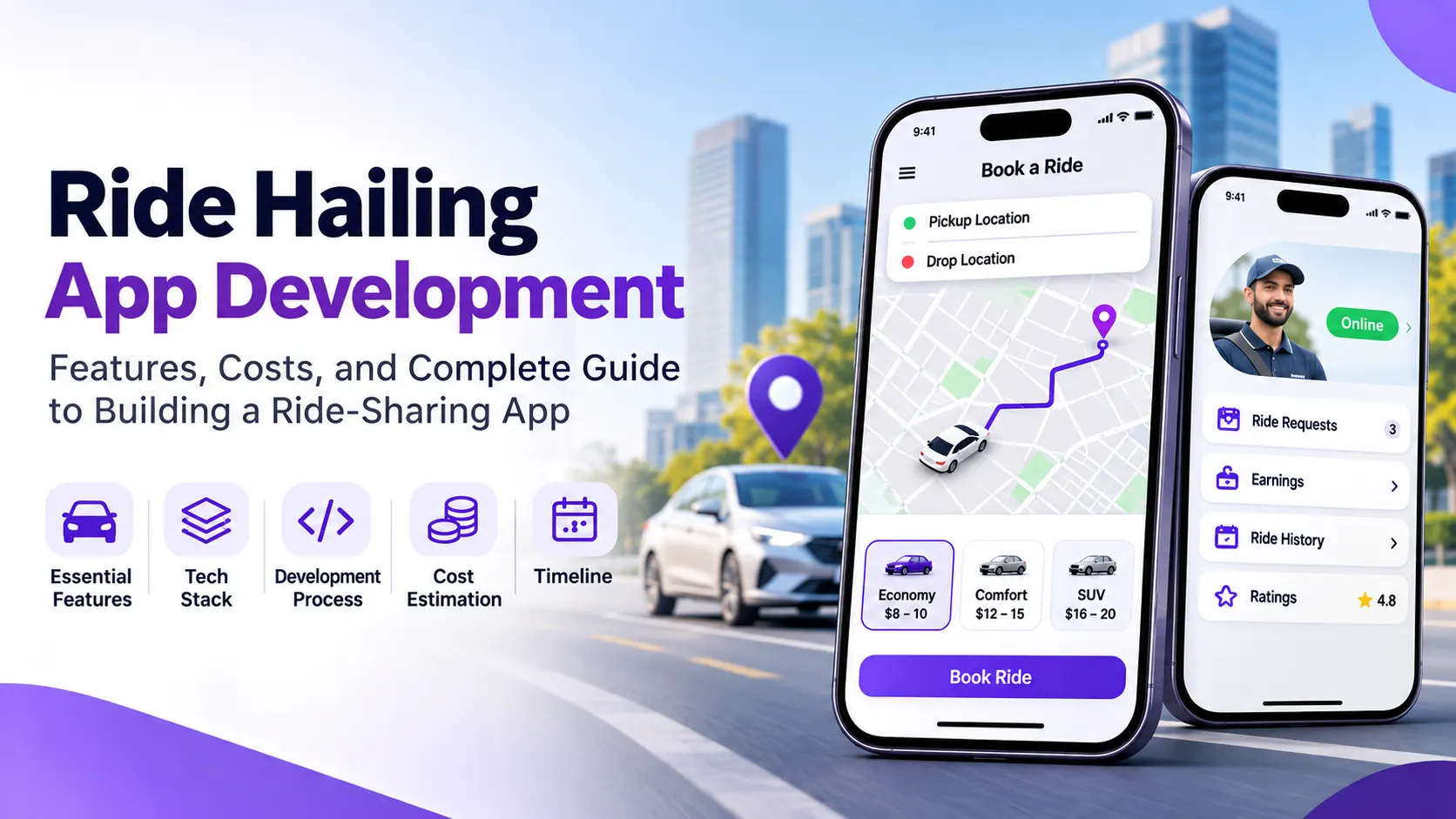
The transportation industry has undergone a major transformation with the introduction of ride-hailing platforms such as Uber, Lyft, and Grab. Today, passengers can book rides, track drivers, estimate fares, and make payments directly through their smartphones. This shift has created significant opportunities for businesses looking to enter the on-demand transportation market.
Ride-hailing app development enables startups, transportation companies, and entrepreneurs to build digital platforms that connect passengers with available drivers. However, developing a successful ride-hailing application involves much more than creating a booking interface. It requires reliable GPS tracking, real-time communication, secure payments, intelligent ride matching, and a scalable backend infrastructure.
At Metatech Official, our mobile app development services focus on creating customised digital solutions that support business operations and improve user experiences.
This comprehensive guide explores the essential features, development approaches, technologies, costs, and processes involved in building a ride-hailing application.
What Is a Ride-Hailing App and How Does It Work?
A ride-hailing app is a mobile application that allows passengers to request transportation services from nearby drivers through a digital platform.
Unlike traditional taxi booking, ride-hailing applications use location tracking, automated matching, and real-time notifications to connect passengers with drivers.
Although ride-hailing and ride-sharing are often used interchangeably, they are not exactly the same. Ride-hailing usually involves booking a vehicle for a requested trip, while ride-sharing can involve multiple passengers sharing transportation.
A typical ride-hailing platform operates through three connected systems:
Passenger Application: Allows users to book rides, track drivers, manage payments, and review trips.
Driver Application: Enables drivers to receive ride requests, navigate routes, manage earnings, and communicate with passengers.
Admin Dashboard: Provides businesses with tools to manage drivers, passengers, bookings, commissions, payments, and platform activities.
These systems communicate through a centralized backend, ensuring that booking information and ride updates remain synchronized.
Businesses investing in custom mobile app development can also introduce unique transportation features based on their operating model.
Must-Have Features of a Ride-Hailing Application
Successful ride-hailing platforms depend on features that improve convenience, reliability, transparency, and safety.
Before beginning development, businesses should identify the essential functions required by passengers, drivers, and administrators.
1. Routing, Direction, and Geolocation
Geolocation is one of the most important components of any ride-hailing application.
GPS technology identifies the location of passengers and drivers, while mapping and routing services help calculate travel distances and estimated arrival times.
Essential location-based capabilities include:
Real-time passenger and driver location tracking
Automatic pickup location detection
Route calculation and navigation
Estimated arrival times
Nearby driver identification
Continuous trip-location updates
However, GPS alone is not enough. A reliable system also requires routing APIs, location-update management, and backend logic to match passengers with available drivers.
Professional mobile app development helps integrate these technologies into a coordinated booking experience.
2. Account Creation and User Profiles
Both passengers and drivers require secure accounts to access the platform.
Passenger registration typically involves a mobile number, email address, or supported social authentication method.
Driver registration requires additional verification, potentially including identity information, driving licences, vehicle registration documents, and insurance details.
User profiles may contain:
Name and contact information
Profile picture
Saved addresses
Ride history
Payment preferences
Ratings and reviews
Secure authentication, role-based permissions, and appropriate data protection are essential for protecting sensitive information.
3. Smooth UI/UX Design
An intuitive user interface plays a major role in user adoption and retention.
Passengers should be able to request rides quickly, while drivers must be able to accept requests and navigate without unnecessary distractions.
Effective UI/UX design includes readable maps, clearly displayed fares, accessible buttons, simple registration forms, and understandable booking statuses.
A professional mobile app development agency should prioritize usability testing before launching the application.
Essential Features for the Passenger Application
The passenger application serves as the primary booking interface. It should provide a straightforward experience from registration to trip completion.
1. Geolocation and Pickup Selection
Passengers should be able to identify their current location automatically or manually select a pickup point.
They can enter a destination, review the proposed route, and confirm their booking.
Location permissions should be requested transparently, with alternatives available when users prefer manual entry.
2. Passenger Profiles
A passenger profile stores relevant information such as contact details, saved destinations, previous bookings, and preferred payment methods.
Account management should also support profile updates and account deletion requests where required.
3. Search Filters and Vehicle Selection
Passengers may prefer different vehicles depending on their budget, group size, or travel requirements.
Useful filtering options include vehicle categories, passenger capacity, accessibility requirements, and service availability.
Businesses can customize these options based on their transportation model.
4. Ride Fare Estimation
Fare estimation allows passengers to review expected costs before confirming a booking.
A fare-calculation system may consider distance, expected duration, vehicle category, base fare, applicable surcharges, and waiting time.
If dynamic pricing is implemented, the app should communicate changes clearly before booking confirmation.
5. Reservations and Cancellations
Passengers should be able to book immediate rides, cancel requests, and potentially schedule trips in advance.
Clear cancellation rules help prevent misunderstandings between passengers and drivers.
Scheduled bookings require additional backend logic for driver allocation and availability.
6. In-App Chat and Calling
Communication features help drivers and passengers coordinate pickup locations and resolve booking issues.
In-app chat, masked calling, or secure communication integrations can reduce the need to expose personal telephone numbers.
7. Multiple Payment Options
Secure payments contribute to a convenient booking experience.
Depending on the target market, an application may support cash payments, debit and credit cards, digital wallets, or local payment gateways.
Payment information should be handled through appropriately secured integrations rather than storing sensitive card credentials unnecessarily.
8. Push Notifications
Push notifications keep passengers informed throughout their journeys.
Notifications may include booking confirmation, driver assignment, driver arrival, trip completion, payment receipts, and promotional offers.
9. Advanced Passenger Features
Businesses can also introduce additional functionality as their platform grows.
Examples include booking rides for another person, scheduling future trips, splitting eligible ride payments, emergency assistance, and sharing trip details with trusted contacts.
These features can improve convenience but should be prioritised according to actual customer demand.
Essential Features for the Driver Application
The driver application is responsible for managing ride requests, navigation, earnings, and trip activities.
Its design should emphasise speed, reliability, and minimal distraction.
1. Driver Login and Verification
Drivers should access their accounts through secure authentication.
Before activation, the platform may require identity verification, driving licence checks, vehicle documentation, and administrator approval.
2. Driver Profile Management
Driver profiles can contain verified personal details, vehicle information, availability status, ratings, and completed trip records.
Drivers should also be able to update permitted profile information through the app.
3. Accept or Reject Ride Requests
When a passenger requests a ride, nearby eligible drivers receive booking notifications.
Depending on platform rules, drivers can accept or decline requests within a defined time.
The matching system should prevent the same booking from being assigned to multiple drivers simultaneously.
4. Trip Information
Drivers need access to relevant booking information, including pickup location, destination, estimated distance, applicable fare information, and passenger communication options.
Displaying accurate information supports better operational decisions.
5. Integrated Navigation
Navigation functionality guides drivers toward pickup points and destinations.
Mapping services may provide route suggestions, distance calculations, and traffic-aware estimates where supported.
The application must also handle temporary internet interruptions and location inaccuracies.
6. Ratings and Reviews
A two-way rating system allows passengers and drivers to provide feedback after completed trips.
Ratings can support service monitoring, but platforms should also provide fair mechanisms for investigating complaints and disputed reviews.
7. Driver Notifications
Drivers receive alerts for new bookings, booking cancellations, scheduled assignments, payment updates, and account notifications.
Important alerts should remain understandable without encouraging unsafe interaction while driving.
8. Contact Passenger
Drivers may need to communicate with passengers to confirm pickup locations or report delays.
Secure calling and messaging features make coordination easier.
9. Payments and Earnings Management
Driver applications should include earnings information, completed trips, commissions, and payment histories.
Where supported, drivers can also access payout requests and settlement reports.
Accurate financial calculations are essential for reducing payment disputes.
Admin Dashboard: The Operational Centre of a Ride-Hailing Business
Beyond the passenger and driver applications, an administrative dashboard is essential for managing the platform.
Administrators need visibility into bookings, registered vehicles, driver activity, service areas, financial transactions, and customer complaints.
A custom dashboard may provide driver approvals, user management, fare configuration, commission settings, promotional campaigns, and operational reports.
For businesses operating through multiple branches or franchises, custom app development can introduce separate franchise dashboards.
Each franchise can manage its assigned drivers, bookings, and financial information, while headquarters maintains centralised oversight.
Permission-based access helps ensure that franchise operators only view authorised records.
This structure is particularly useful for transportation businesses expanding across multiple cities.
How to Develop a Ride-Hailing App: Step-by-Step Process
Developing a ride-hailing platform requires careful planning and coordination between business stakeholders, designers, developers, and quality assurance specialists.
Step 1: Conduct Market Research
Market research helps identify customer expectations, local transportation challenges, existing competitors, and opportunities for differentiation.
Businesses should evaluate passenger demand, driver availability, operating regions, fare expectations, and regulatory requirements.
Understanding these factors before development reduces the risk of building unnecessary features.
Step 2: Define Your Value Proposition
A successful application needs a reason for customers and drivers to choose it over existing alternatives.
Potential differentiators include transparent fares, specialized vehicle services, improved driver commissions, corporate transport, or better service in underserved locations.
The value proposition should address a real market problem rather than simply copying an established platform.
Step 3: Select the Development Approach
Businesses generally choose between native, cross-platform, and hybrid development.
The decision depends on performance requirements, platform support, budget, development resources, and long-term maintenance expectations.
An experienced mobile app development company can evaluate these requirements and recommend an appropriate architecture.
Step 4: Create a Minimum Viable Product (MVP)
An MVP includes the core functions necessary to test the service with real users.
For a ride-hailing business, an MVP typically includes passenger registration, driver registration, ride booking, driver assignment, GPS tracking, basic payment handling, and administrative controls.
Starting with an MVP allows businesses to validate demand before investing in advanced features.
Step 5: Develop and Integrate the Application
Once the design and functional requirements are finalized, developers implement the mobile interfaces, backend APIs, database, mapping services, and administrative dashboard.
Successful integration ensures that passenger requests, driver availability, and booking updates are handled consistently.
Step 6: Test and Launch the Product
Testing should cover functionality, usability, performance, security, and real-world GPS behavior.
Critical scenarios include simultaneous booking requests, cancelled trips, interrupted payments, unreliable network connections, and drivers losing GPS connectivity.
After testing, the application can be submitted to the relevant app stores for review and release.
Step 7: Collect Feedback and Improve
Development continues after launch.
Passenger feedback, driver complaints, booking success rates, and operational reports help identify areas that need improvement.
Regular updates can address technical issues, improve usability, and introduce new functionality.
Choosing the Right Ride-Hailing App Development Approach
Selecting the appropriate development method affects cost, performance, and maintenance.
Native Mobile App Development
Native applications are developed specifically for an operating system.
Android development commonly uses Kotlin or Java, while iOS app development commonly uses Swift.
Native development provides direct access to platform capabilities and extensive control over performance.
However, maintaining separate Android and iOS applications can increase development effort and cost.
Cross-Platform Mobile App Development
Cross-platform frameworks allow developers to share substantial portions of application code between Android and iOS.
Popular options include React Native and Flutter.
React Native is particularly useful for businesses seeking a shared development approach while retaining access to native device functionality.
For many startups, cross-platform development can reduce duplicated work and simplify ongoing maintenance.
Hybrid Mobile App Development
Hybrid applications commonly combine web technologies with a mobile application container.
Technologies such as Ionic and Capacitor can support this approach.
Hybrid development may be suitable for less demanding applications, although ride-hailing systems require careful evaluation of background location tracking, navigation, and real-time performance.
Technology Stack Required for Ride-Hailing App Development
Choosing reliable technologies is essential for developing a scalable transportation platform.
A possible technology stack includes:
| Component | Technologies |
|---|---|
| Mobile applications | React Native, Flutter, Swift, Kotlin |
| Backend development | Node.js, Express.js |
| Database | MongoDB, PostgreSQL |
| Cloud infrastructure | Google Cloud, AWS |
| Maps and navigation | Google Maps Platform, Mapbox |
| Real-time communication | WebSockets, Socket.IO |
| Push notifications | Firebase Cloud Messaging |
| Authentication | Firebase Authentication or custom authentication |
| Payment integration | Regional payment gateways and supported providers |
| Admin dashboard | React.js and modern web technologies |
At Metatech Official, technologies such as React Native, Node.js, MongoDB, and cloud infrastructure can be combined to develop applications according to specific business requirements.
The final architecture should depend on projected usage, security needs, operational complexity, and scalability expectations.
Ride-Hailing App Development Cost: What Should Businesses Expect?
The cost of Ride-Hailing App Development depends on application complexity, required features, supported platforms, development location, and third-party integrations.
A basic booking application is substantially different from an enterprise transportation platform with advanced dispatch systems, sophisticated payments, and multiple operating regions.
The following figures are illustrative planning ranges rather than fixed quotations.
| Development Scope | Illustrative Cost |
|---|---|
| Basic ride-hailing MVP | $15,000–$40,000 |
| Mid-level ride-hailing platform | $40,000–$100,000 |
| Advanced, enterprise-oriented platform | $100,000–$250,000+ |
Actual costs can fall outside these ranges depending on scope, development team, existing components, and contractual requirements.
Factors Affecting Development Cost
Platform Selection: Developing separate Android and iOS applications can require more effort than sharing code through a cross-platform framework.
Feature Complexity: Advanced dispatch algorithms, dynamic pricing, digital wallets, and franchise management increase development requirements.
UI/UX Design: Custom interfaces, accessibility requirements, and extensive usability testing affect design costs.
Backend Infrastructure: Real-time ride matching, concurrent users, location updates, and financial processing require reliable architecture.
Third-Party Integrations: Mapping APIs, SMS services, payment gateways, and cloud hosting introduce additional expenses.
Development Team: Costs also depend on team size, experience, geographical location, and project duration.
Businesses should budget separately for development, infrastructure, maintenance, customer support, and ongoing operational expenses.
How Long Does It Take to Build a Ride-Hailing Application?
Development timelines vary according to complexity.
A narrowly scoped MVP may require approximately three to six months for a small experienced team, while more sophisticated platforms can require six to twelve months or longer.
The project schedule should account for requirements gathering, UI/UX design, development, integration, quality assurance, and deployment.
Businesses should also consider time for driver onboarding, legal reviews, payment-provider approval, and real-world operational testing.
Aggressive deadlines without adequate testing can create serious reliability and security problems.
Key Challenges in Ride-Hailing App Development
Building the application is only one part of launching a transportation service.
Real-Time Ride Matching
The platform must identify suitable drivers, manage simultaneous requests, and prevent duplicate bookings.
Scalability and Server Performance
As the number of active drivers and passengers increases, infrastructure must support more frequent location updates and booking events.
Security and Data Protection
Ride-hailing applications process personal information, location histories, and financial records. Secure authentication, encryption, access controls, and appropriate data retention policies are essential.
Driver and Passenger Safety
Businesses should consider driver verification, trip sharing, emergency support, complaint management, and incident-response procedures.
Operational Management
Customer support, driver recruitment, commission structures, payment settlements, and local transportation requirements also influence long-term success.
Addressing these issues early creates a stronger foundation for sustainable growth.
How Metatech Official Can Help With Ride-Hailing App Development
Metatech Official provides mobile app development services for businesses seeking tailored digital solutions.
Our approach to custom mobile app development focuses on understanding business requirements, designing practical workflows, and selecting technologies that support future expansion.
For ride-hailing projects, development requirements may include passenger applications, driver applications, administrative dashboards, GPS integration, booking management, payment connectivity, and franchise management systems.
As a mobile app development agency, Metatech Official works with modern development technologies to create solutions aligned with individual business needs.
Whether you want to launch a transportation startup, digitise an existing taxi service, or expand into new cities, selecting the appropriate technical architecture is essential.
Businesses looking to hire app developer professionals should evaluate technical experience, communication, source-code ownership, deployment processes, and post-launch support before making a decision.
A reliable development partner should also explain infrastructure costs, scalability requirements, and potential technical risks before implementation.
Conclusion
Ride-hailing applications have reshaped how passengers access transportation and how drivers connect with customers.
However, building a successful platform requires more than replicating the features of popular transportation apps.
Businesses must evaluate market demand, define their competitive advantage, select appropriate technologies, and develop reliable systems for bookings, payments, navigation, and administration.
Investing in professional mobile app development can help organizations create scalable platforms tailored to their operations.
With the right planning and custom app development strategy, businesses can launch a functional ride-hailing service, gather customer feedback, and gradually introduce advanced capabilities.
Planning to build your own ride-hailing application?
Contact Metatech Official to discuss your project requirements, explore development options, and plan a customized mobile application for your transportation business.
Frequently Asked Questions (FAQs)
1. How much does it cost to develop a ride-hailing app?
The cost depends on required features, platform selection, integrations, design complexity, and development resources. A basic ride-hailing MVP may cost approximately $15,000–$40,000, while advanced platforms can exceed $100,000. Businesses should request a detailed quotation based on their requirements rather than relying solely on generic estimates.
2. How long does it take to build a ride-hailing application?
A basic ride-hailing MVP may take approximately three to six months, depending on the development team and project scope. Applications requiring sophisticated dispatching, multiple payment integrations, advanced analytics, or franchise management may take longer. Thorough testing is necessary before public launch.
3. Which technology is best for ride-hailing app development?
React Native and Flutter are popular choices for cross-platform development, while Swift and Kotlin support native development. Node.js, MongoDB, cloud infrastructure, and mapping services can provide backend functionality. The appropriate technology depends on performance requirements, budget, scalability, and long-term maintenance plans.
4. What features are essential in a ride-hailing app?
Essential features include passenger and driver registration, GPS tracking, ride booking, driver matching, fare estimation, route navigation, booking notifications, payments, and ratings. An administrative dashboard is also important for managing drivers, passengers, financial transactions, commissions, and operational activities.
5. Why should businesses hire a mobile app development company for a ride-hailing project?
An experienced mobile app development company can help businesses plan application architecture, design user interfaces, integrate third-party services, implement secure backend systems, and test the platform before launch. Professional mobile app development services can also support scalability planning, maintenance, and the introduction of additional features as the business grows.